A surreal Enlightenment-era novel involving demonic sisters, mystical formulas and stories within stories is getting fresh attention at a Swiss exhibition. Its author’s life has a mystery of its own: an unproven theory that he believed he was a werewolf.
Jan Potocki’s The Manuscript Found in Saragossa explores a mysterious world
Jan Potocki’s The Manuscript Found in Saragossa follows Alphonse van Worden, a young Walloon officer crossing Spain’s Sierra Morena on his way to join the Spanish army in Madrid. His journey brings encounters with two demonic Moorish sisters, shape-shifting apparitions and a Jewish Kabbalist trying to control spirits and decipher the universe.
Written in French more than 200 years ago by a Polish count, the novel ranges from the birth of Jesus Christ to the early 19th century, with stories reaching from the Mediterranean and North Africa to Mexico, Peru and the Philippines. Its narratives fit inside one another like a Chinese box.
Salman Rushdie has praised it as resembling “the most brilliant modern novels, as if it were written yesterday”. The curators of the exhibition at the Fondation Jan Michalski in Montricher describe it as “a western version of One Thousand and One Nights”.
Jan Potocki’s life and the mysterious werewolf theory
Potocki, born in 1761 in Pików in the Polish-Lithuanian Commonwealth, was educated in Orbe, Switzerland, not far from the exhibition. The first fragments of his novel appeared in St Petersburg in 1804.
His interests ranged widely. Exhibition co-curator François Rosset says Potocki was among the few Poles deeply interested in Jewish culture as practised by rabbis in eastern Poland, in what is now Ukraine. That interest, Rosset says, led him toward esoteric learning, including ancient Egypt and Mesopotamia.
Potocki shot himself in 1815, aged 54. An inventory of his possessions at his Uładówka home later recorded a silver sugar bowl with its lid missing. Speculation that he had used part of the lid to make the fatal bullet helped fuel theories that he thought he was a werewolf; the claim remains unproven.
Rediscovered manuscripts reveal two versions of Potocki’s novel
The book’s publishing history is complicated too. It circulated for years in incomplete and competing versions. Ian Maclean’s English translation for Penguin was based on René Radrizzani’s revised 1990 French edition, once considered the most faithful text.
That view changed in 2002, when the exhibition’s other co-curator, Dominique Triaire, found eight miscatalogued manuscripts in Polish archives. “We were able to establish that Potocki had left behind not one but two novels,” Triaire says.
Among the book’s admirers is Nobel laureate Olga Tokarczuk, who has called it part of her “literary first-aid kit”. She said she could open it at random and draw “a good dose of creative energy”. French novelist and Prix Goncourt winner Mathias Énard is also an admirer.
Film, television and theatre adaptations of The Manuscript Found in Saragossa
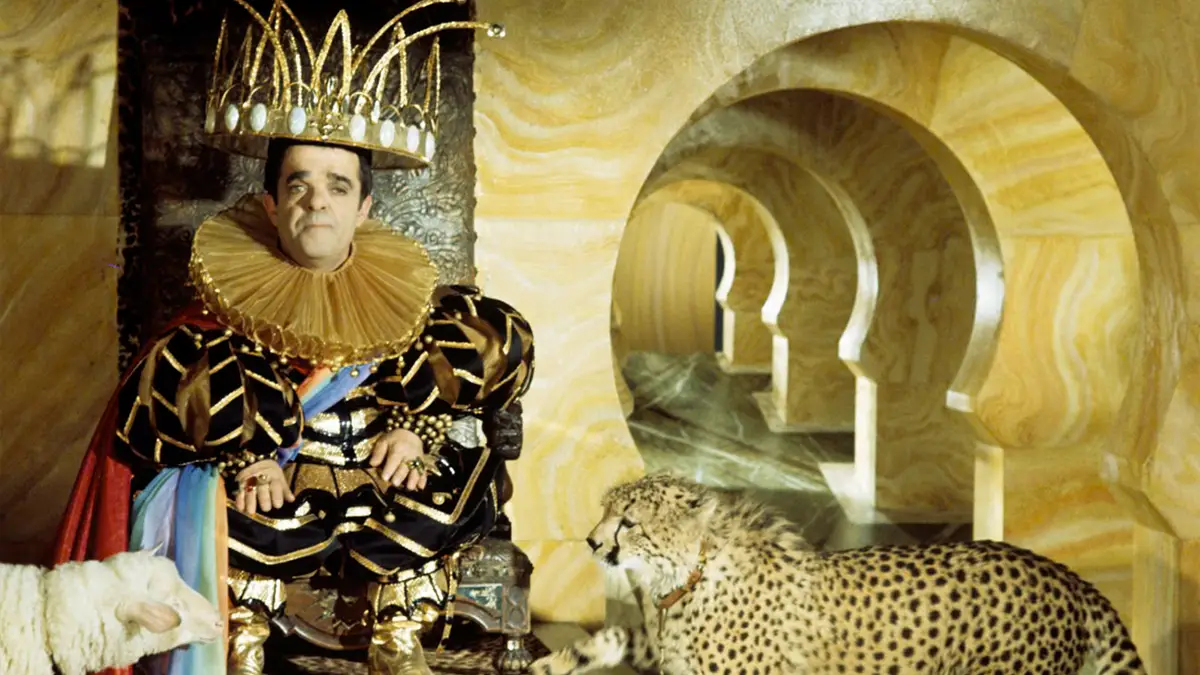
Its influence extends beyond literature. The exhibition shows the opening of Polish director Wojciech Has’s 1965 black-and-white film adaptation, in which soldiers run through the ruins of Saragossa to Beethoven’s Ode to Joy. The film developed a cult following, and Grateful Dead musician Jerry Garcia initiated a 1990s restoration later supported by Francis Ford Coppola and Martin Scorsese.
Also represented are the four-part 1973 French television adaptation La Duchesse d’Avila and 10 engravings by Leonor Fini, commissioned in Buenos Aires in 1961 for a rare edition. More recently, director Grzegorz Jarzyna adapted the story for the stage at Warsaw’s Teatr Polski.
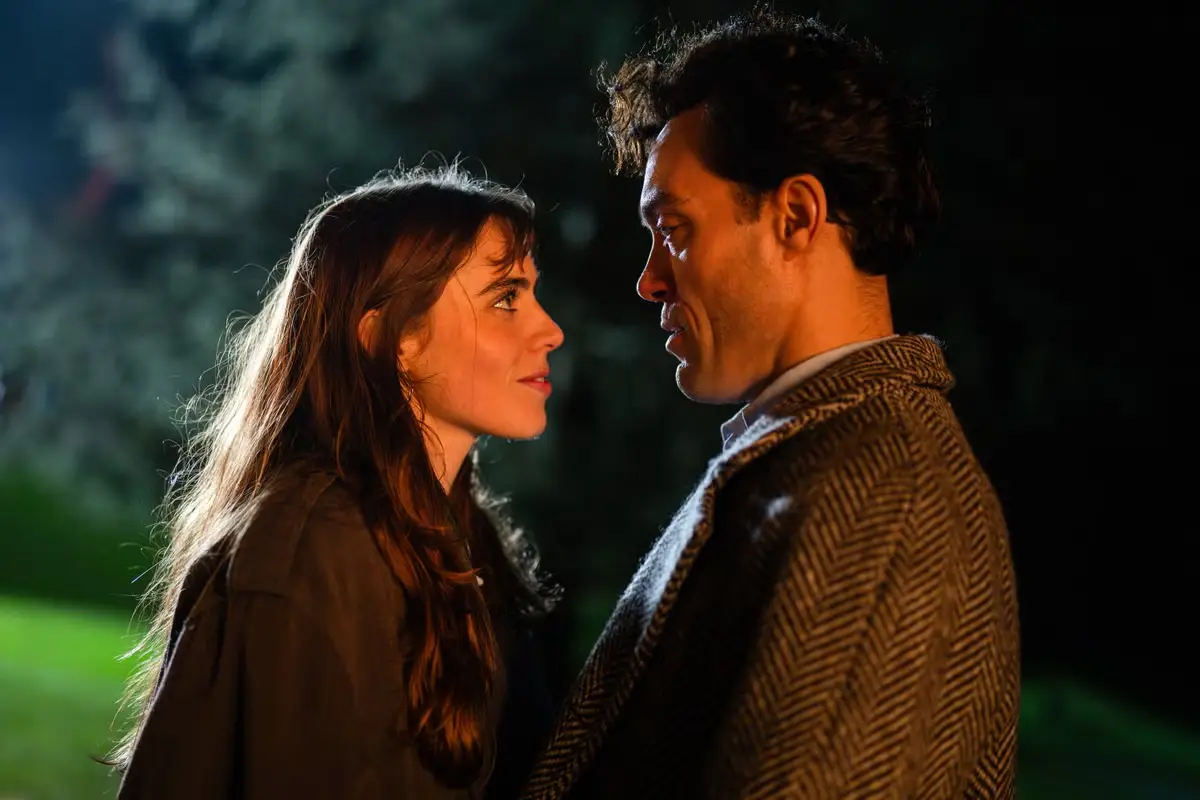
Jarzyna’s The Saragossa Manuscript: The Gomelez Legacy follows Alex, a modern city dweller who travels back to 18th-century Spain and becomes caught up in a global secret society led by the Gomelez clan. In Potocki’s novel, the same Moorish family guides Alphonse on a journey from inherited assumptions toward independent thought.
Why Potocki’s Enlightenment novel remains relevant today
For Triaire, that transformation reflects Potocki’s Enlightenment belief in a shared humanity across racial and religious differences. The novel also imagines the possibility of coexistence among the three major monotheistic religions.
Its embrace of reason leaves room for uncertainty, too. Triaire sees the supernatural elements entering through cracks in Enlightenment certainties shaken by the French Revolution and Napoleonic wars. “I think this fragility of reason also speaks to our own age,” he says.
Rosset believes the novel continues to offer something different to each generation. “He wrote a book that is outside time, but that belongs to all times.”