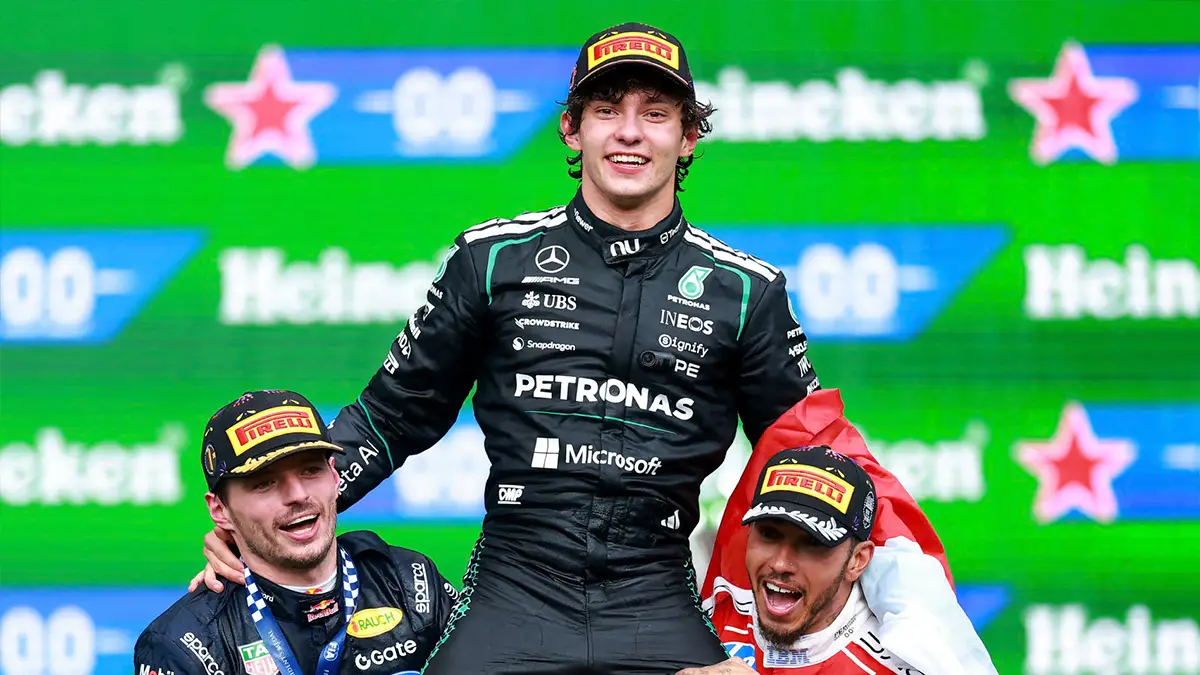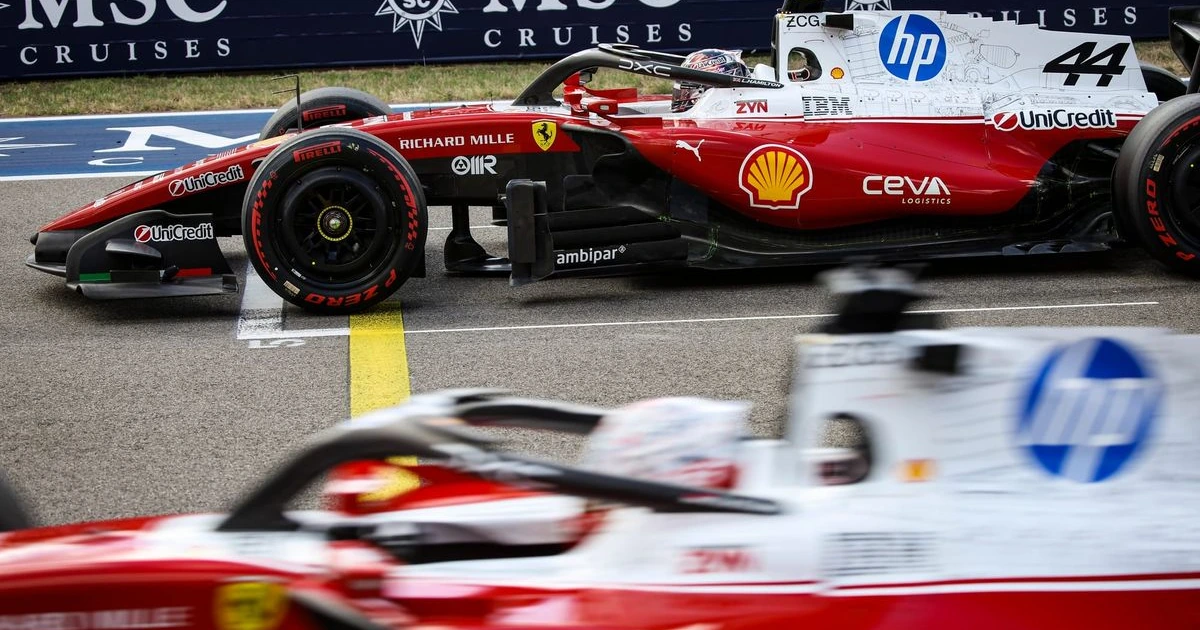
Ferrari’s latest attempt to turn strong pace into Formula 1 pole position ended unsuccessfully at Austin, extending its 2026 qualifying drought to 18 races. Friday pacesetter Charles Leclerc qualified fourth, while Lewis Hamilton took fifth behind Kimi Antonelli’s Mercedes and the two Red Bulls.
The result exposed two familiar Ferrari weaknesses: difficulty preparing its tyres for a single qualifying lap and a lack of straight-line speed. Unfortunate timing during the final phase of qualifying also worked against the team.
Charles Leclerc blames tyre temperatures for Ferrari’s qualifying struggles
Leclerc said Ferrari had the potential to challenge at the front, but the tyres were not in the ideal operating window when it mattered most. Temperatures were around 1°C or 2°C lower in Q3, leaving him struggling from the opening lap of his run.
"It was like 1°C or 2°C less in Q3, and for me, it was a huge difference. Just really struggled in the outlap," Leclerc said. "I was sliding quite a lot already from the outlap, and that made it very difficult after that."
The issue has followed Ferrari throughout the season, despite multiple upgrades. Leclerc said the team must understand the tyres better, noting that rivals appear to find qualifying performance more easily when conditions move slightly outside the ideal window.
Ferrari’s tyre weakness in qualifying is also linked to a strength on Sundays, when the car can preserve its tyres effectively. That left Leclerc expecting a stronger race than qualifying performance, as happened at Spa, where he and Hamilton finished second and fourth after starting fifth and sixth.
Lewis Hamilton points to Ferrari’s straight-line speed deficit
Hamilton had a different explanation for the deficit. He said his out lap was clean and that tyre temperature was not a problem, instead pointing to Ferrari’s power-unit shortfall on Austin’s long back straight.
"Our car is really solid, maybe slightly better than the others," Hamilton said. "But I think they have closed up on chassis."
The speed data showed Ferrari’s disadvantage throughout qualifying. Leclerc was 5km/h slower than Hamilton at the end of the back straight and 10km/h slower than Antonelli. Hamilton said Ferrari was unable to make the same progress in straight-line speed as Mercedes and Red Bull during the season.
"If we had the same power as them, we would be right there in the battle. I think we could probably be on the front row," Hamilton said.
Q3 timing and changing track conditions cost Ferrari at Austin
Leclerc’s best Q2 lap was faster than his final Q3 effort and would have been good enough for the front row if repeated. The Ferraris were also the only drivers to legally improve on their final Q3 attempts, but Antonelli and the Red Bulls had already set faster times on their opening runs.
Track conditions appeared less favourable for Ferrari later in the session, with stronger gusts and more cloud cover. Hamilton also made a small error out of the final corner, costing him the opportunity to finish ahead of Leclerc and possibly split the Red Bulls.
Ferrari therefore lost out through a combination of tyre preparation, power deficit and the timing of its best laps. The team’s race pace and tyre preservation will now be tested on Sunday at Austin.