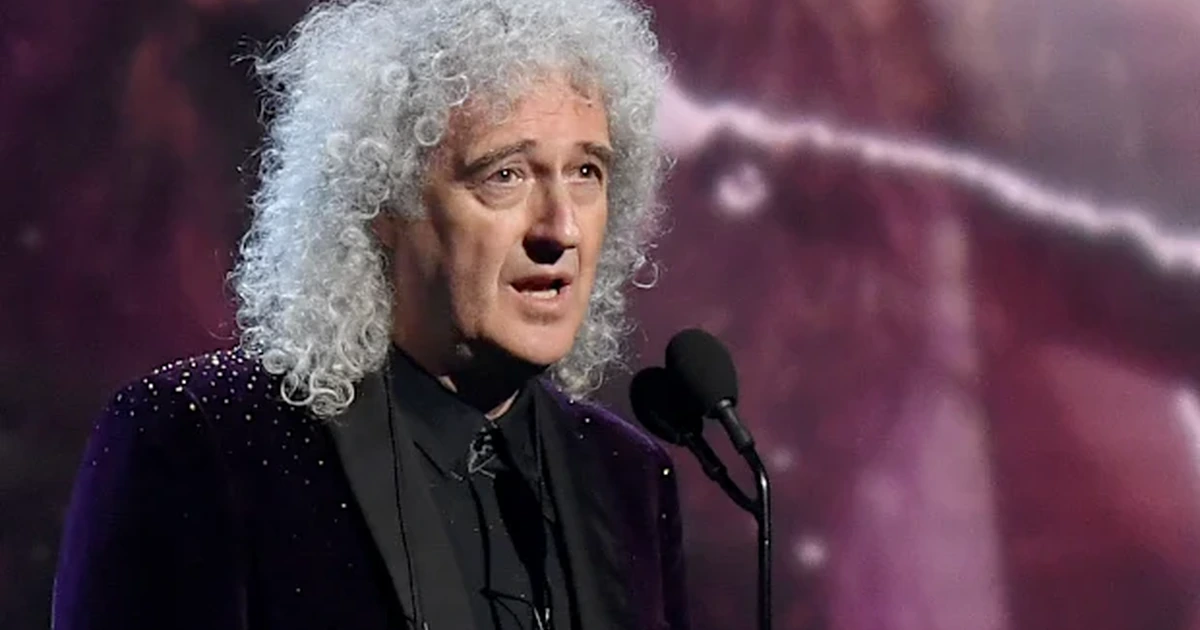
Brian May has opened up about the private pain he still carries after Freddie Mercury’s death, admitting that he deliberately avoids marking the anniversary because the date brings back memories he finds almost impossible to confront.
The Queen guitarist, now 79, described losing his bandmate and friend as one of the “most terrible” days of his life. For fans, Freddie’s death remains one of the defining tragedies in rock history. For Brian, however, the anniversary is not a moment for celebration or public remembrance. It is a day he would rather avoid.
Why Brian May Refuses to Mark Freddie Mercury’s Death Anniversary
Freddie Mercury and Brian May stood together at the heart of Queen, one of Britain’s most successful music acts. Freddie died in November 1991 at the age of 45, after complications arising from HIV and AIDS. This November marks 35 years since his death, yet Brian has never treated the date as a formal occasion.
Instead, he has continued to honor Freddie through the music they created and the life they shared. Over the years, Brian has repeatedly returned to the stage with Queen drummer Roger Taylor, keeping the band’s songs alive for audiences around the world. But performing the music is very different from revisiting the exact day Freddie died.
“I don't celebrate the anniversary of his death. It's a day to avoid because it brings up pain,” Brian said. “The day he died was one of the most terrible days of our lives.”
His words reveal the difference between remembering someone through their work and forcing yourself to relive the moment they were lost. Brian explained that he and Roger acknowledge Freddie in everything they do, even without turning the anniversary into a public ritual.
“There isn't anything that we do where we don't refer to him in some way,” he said. “The times we had together, the values and adventures we shared.”
Freddie Mercury’s Final Days and His Public AIDS Announcement
Freddie’s final days were marked by a decision to tell the world the truth about his health. Just one day before his death, he instructed Queen’s manager, Jim Beach, to release a statement confirming that he had AIDS. Freddie said he had kept the information private to protect the privacy of those around him, but believed the time had come for his friends and fans to know.
In the statement, he wrote: “I felt it correct to keep this information private to date to protect the privacy of those around me. However, the time has come now for my friends and fans around the world to know the truth and I hope that everyone will join with me, my doctors and all those worldwide in the fight against this terrible disease.”
The cause of Freddie’s death was bronchial pneumonia resulting from AIDS. His funeral was attended by Brian, Roger and John Deacon, the surviving members of Queen, along with 35 close friends, including Elton John.
The Mystery Surrounding Freddie Mercury’s Ashes and Burial Location
In accordance with Freddie’s wishes, his former partner and close friend Mary Austin was given his ashes. She buried them at a location known only to her and has vowed never to reveal where they were placed. Queen fans have long believed that the ashes may be at Kensal Green Cemetery, although the location has never been confirmed by Mary.
How Brian May and Queen Keep Freddie Mercury’s Legacy Alive
Freddie’s voice and Queen’s legacy have continued to reach new generations through unforgettable songs such as Bohemian Rhapsody, We Are The Champions and We Will Rock You. The band’s music remains central to British rock history, but behind those anthems is a friendship Brian still carries with him every time he steps onto a stage.
Since Freddie’s death, Brian has continued playing guitar and has performed with acts including Motorhead, the Foo Fighters and Lady Gaga. He also joined Roger in Queen + Adam Lambert, a project created so the pair could continue performing Queen songs live while keeping the band’s spirit present for audiences.
Brian May Explains Why Queen’s Freddie Mercury Hologram Plans Have Stalled
There had also been suggestions that Brian and Freddie could appear together again through a new hologram production similar to ABBA Voyage. Those plans have stalled. Brian said this was “partly because of the AI thing,” explaining that he was “not comfortable” with what he described as “stealing people's work.”
He also said any such show would need to avoid “taking advantage of existing artists.” That hesitation reflects the same care Brian has shown when speaking about Freddie’s memory: the music must continue, but the person behind it should never be treated as a prop.
For Brian, Freddie is present in every performance, every familiar lyric and every memory of the adventures they shared. Yet when the anniversary arrives, the grief remains too raw for celebration. Rather than publicly marking the day, he chooses to step away from it, carrying Freddie forward through the music without pretending that the loss no longer hurts.